Showing posts with label Playstation3. Show all posts

14 May 2011

Report: PlayStation 3 trade-ins on the rise

PlayStation 3 trade-ins have hit higher-than-expected levels at some retail outlets following Sony's PlayStation Network troubles, a new report claims.
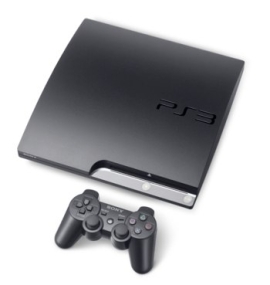
According to gaming publication Edge, U.K. retail sources say they've seen a "massive increase" in PlayStation 3 trade-ins over the past several weeks. In one location, a source claims, PlayStation 3 trade-ins are up "over 200 percent." Half of those folks are taking cash for the trade, the publication's source says, while the other half are opting to buy Microsoft's Xbox 360.

A source from another game retailer told Edge that the strong uptick in trade-ins is being driven by the "hard-core online shooter crowd" that hasn't been able to play online with the PlayStation 3 for weeks.

Sony's troubles started last month when the company announced that its PlayStation Network had been hacked. The company subsequently took the service down to address the security problems. Sony has since revealed that the personal information was stolen from more than 100 million customers who subscribed to its PlayStation Network, Qriocity, and Sony Online services. Sony said yesterday that it hopes to bring the online services back up "in the next few days."

While the PlayStation Network remains inaccessible, Microsoft's alternative, Xbox Live, has been running without a hitch, forcing gamers who want to play titles online to migrate to that service and potentially leading to the trade-ins that retailers have apparently been witnessing.
However, it's worth noting that any trade-in problem is not universal. I contacted several of my local GameStop stores, and only one of them reported that PlayStation trade-ins were higher than expected. 

Neither GameStop's national office nor Sony immediately responded to TA's request for comment.

  • Share this
  • Sumbit to Digg
  • Sumbit to StumbleUpon
  • Sumbit to Delicious
  • Sumbit to Technorati
  • Sumbit to Reddit
  • Sumbit to Mixx
  • Sumbit to Twitter
  • Sumbit to Furl
  • Sumbit to Design Float
  • Sumbit to Blinklist
  • Sumbit to Yahoo Buzz
  • Sumbit to Google Bookmarks

30 April 2011

Hackers claim to have stolen PSN credit card info


Security researchers say hackers claiming to have credit card information stolen from Sony's PlayStation Network last week are trying to sell that information on underground Internet forums, but the veracity of the claims could not be confirmed.

Sony warned its more than 70 million customers on Tuesday that their personal information--including customer names, addresses, e-mail addresses, birthdays, network passwords, and user names, as well as online user handles--was obtained illegally by an "unauthorized person." Sony responded to the intrusion, which occurred between April 17 and 19, by temporarily disabling PSN and Qriocity, its subscription music service, and contracting with an outside security firm to investigate the intrusion on its network.

"While there is no evidence at this time that credit card data was taken, we cannot rule out the possibility," a company spokesman wrote Tuesday. Sony said in an FAQ posted today that the credit card data was encrypted and reiterated that it had no evidence the data was stolen.
However, Kevin Stevens, a security expert with Trend Micro, said in a tweet today he had seen discussions on online forums in which the purported hackers were offering to sell a database of 2.2 million Sony customer credit card numbers stolen during the PSN attack.

"Sony was supposedly offered a chance to buy the DB [database] back but didn't," Stevens said, adding that, "No, I have not seen the DB so I can not verify that it is true."

"Supposedly the hackers selling the DB says it has: fname, lnam, address, zip, country, phone, email, password, dob, ccnum, CVV2, exp date," he said, referring. The less obvious acronyms refer to credit card holders' first name, last name, credit card number, and credit card security code.

Internet security blogger Brian Krebs, who noted witnessing similar activity, posted screenshots of the discussion on his Krebs on Security blog.

Neither Stevens nor Krebs said they had seen the actual database, but the information may already be circulating among cybercriminals. Reports began trickling out yesterday from PSN users about recent fraudulent charges on the credit cards they used for the PlayStation service.

An employee of GameFly Media tweeted that a colleague's card was used to buy $1,500 worth of goods at a grocery store in Germany. Meanwhile, a reader of gaming site VGN365 said his bank had informed him of a fraudulent $300 debit card withdrawal this weekend.

And another person reported on video game forum site Neogaf.com $600 in fraudulent withdrawals.


The breach has already prompted a lawsuit and a letter to Sony from Connecticut Sen.

Richard Blumenthal saying he was troubled the company took a week to notify customers of the breach and urging Sony to provide free credit protection services to prevent identity fraud and theft.

Update April 29 at 1:47 p.m. PT The source of the initial tip, Trend Micro's Kevin Stevens, downplayed the significance of the finding today, posting a message on Twitter saying: "This #PSNHack is turning into a bunch of FUD, it really is. I posted up what I saw to warn people, not to incite the masses to create FUD."
  • Share this
  • Sumbit to Digg
  • Sumbit to StumbleUpon
  • Sumbit to Delicious
  • Sumbit to Technorati
  • Sumbit to Reddit
  • Sumbit to Mixx
  • Sumbit to Twitter
  • Sumbit to Furl
  • Sumbit to Design Float
  • Sumbit to Blinklist
  • Sumbit to Yahoo Buzz
  • Sumbit to Google Bookmarks

21 April 2011

Report: Next Xbox, Playstation launching in 2014

If you're hoping for the Xbox 720 or the PlayStation 4 to arrive anytime soon, prepare to be disappointed.

Citing "industry sources," video game blog Kotaku reported yesterday that Microsoft and Sony aren't planning to release follow-ups to the Xbox 360 and PlayStation 3 until 2014. One of the blog's sources said that Microsoft hasn't even decided which components its next console will offer when it eventually launches.

If both Microsoft and Sony wait until 2014 to release new machines, it would mark a dramatic shift in the way console makers have structured launch schedules.

Historically, most console companies release new devices an average of every five years. Microsoft, for example, launched the original Xbox in 2001 and followed that up with the Xbox 360 in 2005. Sony's PlayStation 2 launched in 2000 and its follow-up console hit store shelves in 2006. A 2014 launch would leave the Xbox 360 on store shelves for nine years, and the PlayStation 3 for eight years, without a successor in place.

Cashing in on a console until the bitter end is something that Sony has never taken issue with. The company has said on numerous occasions that it follows a "10-year life cycle" for consoles. In fact, the company is still selling thousands of PlayStation 2s every month, even though the PlayStation 3 is available. But this time around, things could be different, since there wouldn't be a newer console in place to help boost sales over the long haul.

Speaking to TechAce last year for a story outlining the death of the five-year console lifecycle, Patrick Seybold, senior director of corporate communications for Sony Computer Entertainment, seemed nonplussed by the shift. He made it clear that Sony has always believed that its consoles can hold up over a 10-year period.

"We at PlayStation have never subscribed to the concept that a console should last only five years," he said. "Both the original PlayStation and PlayStation 2 had life cycles of more than 10 years, and PlayStation 3 will as well. The 10-year life cycle is a commitment we've made with every PlayStation consumer to date, and it's part of our philosophy that we provide hardware that will stand the test of time providing that fun experience you get from day one for the next decade."

Microsoft's senior director of Xbox product management, David Hufford, indicated last year at the Consumer Electronics Show that his company is on the same page as Sony. And with the release of Microsoft's motion-gaming peripheral Kinect in November, the company was potentially able to extend the life of its console.

"I think it's important to say that the Xbox 360 is the console of the long future for us," Hufford said before an audience at CES. "There is no need to launch a new console because we're able to give this console new life either with software upgrades or hardware upgrades like Project Natal. The Xbox 360 was designed for a long life, and I don't even know if we're at the midpoint yet."
Such a statement seemingly makes perfect sense to game maker Electronic Arts. Last year, EA CFO Eric Brown said there isn't much room for improvement in the console market and there simply isn't a compelling reason for either Sony or Microsoft to release a new hardware platform in the near future.

"Today we have two of the three consoles that operate in full high-definition and are running games at 60 frames per second," Brown said. "If you step back and say if it's a multibillion capital dollar investment for the next generation, the question I would ask is 'if you were to produce that then what would you display it on?' There's really nothing in terms of broadly available consumer viewing technology other than 1080p flat panel televisions. And so you could upgrade in theory, but you wouldn't get the obvious graphical benefit that we saw really drove the sharp transitions in the prior cycle."

Even so, Microsoft is seemingly looking toward the future. Last month, a job notice was posted on the company's Web site, seeking a hardware engineer for its Interactive Entertainment Business division. The job would require the person to be "responsible for defining and delivering next-generation console architectures from conception through implementation." The notice led some to suspect that this future employee will be working on the next version of the Xbox.

What about the Wii?
Although Kotaku's sources didn't mention the Wii, many industry watchers believe that Nintendo will be launching a successor to its motion console later this year. Nintendo hasn't said a word about what its next console will offer or even when it might hit store shelves.
Not everyone is convinced that a new Wii would even sell all that well if it did hit store shelves in 2011. In an interview with IndustryGamers earlier this year, Wedbush analyst Michael Pachter said that the chances of the Wii 2 succeeding after a late 2011 launch would be slim. One of the key additions would be HD suppport, which the Xbox 360 and PS3 have had since launch. Pachter sees Nintendo as jumping aboard that train much, much too late.

"I just think Nintendo's blown it; I think by the time they launch [their next console] if it's Christmas 2011, it's two years too late, and for sure one year too late," Pachter said in the interview. "So it's over--I don't think they can ever recover. Wii sales will continue to decline and I think Wii 2 will not sell well."

Sony and Nintendo declined TechAce's request for comment. Microsoft did not immediately respond.
  • Share this
  • Sumbit to Digg
  • Sumbit to StumbleUpon
  • Sumbit to Delicious
  • Sumbit to Technorati
  • Sumbit to Reddit
  • Sumbit to Mixx
  • Sumbit to Twitter
  • Sumbit to Furl
  • Sumbit to Design Float
  • Sumbit to Blinklist
  • Sumbit to Yahoo Buzz
  • Sumbit to Google Bookmarks

18 February 2011

Sony Banning PlayStation 3 Hackers for Life

Sony came down hard on PlayStation 3 hackers today, saying they will be permanently banned from the company's online services. 

"Violation of the system software license agreement for the PlayStation 3 System invalidates the consumer guarantee for that system," reads a notice posted to Sony's official PlayStation blog. "In addition, copying or playing pirated software is a violation of international copyright laws. Consumers using circumvention devices or running unauthorized or pirated software will have access to the PlayStation Network and access to Qriocity services through PlayStation 3 system terminated permanently." 

  
To avoid the lifetime shutout, Sony said, consumers must "immediately cease use and remove all circumvention devices and delete all unauthorized or pirated software from their PlayStation 3 systems."
In the post, Social Media Manager Jeff Rubenstein said the policy represents an initial response to questions from PlayStation.Blog readers about how Sony plans to deal with breaches of its policy.
The company did not say when the ban will begin, but the blog PS3 News is reporting that many users of its PS3 forums have already confirmed receiving e-mail notices from Sony followed by their PlayStation 3 consoles being banned.
According to one account, "If you get error 0x8002A227, Sony banned your PS3 from the PSN."
This is just the latest step by Sony to thwart PlayStation 3 jailbreaks. 

In the most well-publicized battle, the company last month requested a restraining order against famed iPhone jailbreaker George Hotz, also known as Geohot, for coming up with a jailbreak that lets people run unauthorized software on the PS3. 

Sony alleged that the jailbreak, created with the assistance of the hacking group fail0verflow, violates the Digital Millennium Copyright Act and asked a court to stop Hotz from making any material related to his hack available on the Web. Hotz countered Sony's claim, saying his solution was a jailbreak for a closed system, just like any jailbreak for mobile phones, which are explicitly allowed by the DMCA. 
A U.S. District Court granted a temporary restraining order, and Hotz has since removed all mentions of the jailbreak from his site, but Sony mistakenly retweeted the jailbreak code.
That case is ongoing.
Sony also took legal action last year to halt the sales in some places of PS Jailbreak, a USB dongle that allows PlayStation 3 owners to dump borrowed games onto the system's hard drive.
In addition, Sony has tightened security with each successive firmware update. 

In its statement today, the company said that "by identifying PlayStation 3 systems that breach our guidelines and terminating their ability to connect to PlayStation Network, we are protecting our business and preserving the honest gameplay experiences that you expect and deserve."
A majority of commenters to the blog seem pleased by Sony's latest move. 

"Thanks for acknowledging this officially. Good to know Sony is not just hoping that this goes away," wrote one poster. Wrote another: "Thank You Sony! Ban these punks!"
But a few voices of dissent popped up on the forums as well. 

"If Sony actually took the time to know what us (the consumers) wanted, maybe they would see less piracy," one person wrote. "I mean the whole reason hackers want to hack the PSP Go is to play games that are still only available in UMD only." 

Wrote another: "While I understand the security and legal issues relevant to piracy and hacking, if I felt companies' motivation was pure, I [might] be OK with this stern stance. But, I think it is motivated more by greed and control than anything else. They want to keep all the $$$ for themselves."

  • Share this
  • Sumbit to Digg
  • Sumbit to StumbleUpon
  • Sumbit to Delicious
  • Sumbit to Technorati
  • Sumbit to Reddit
  • Sumbit to Mixx
  • Sumbit to Twitter
  • Sumbit to Furl
  • Sumbit to Design Float
  • Sumbit to Blinklist
  • Sumbit to Yahoo Buzz
  • Sumbit to Google Bookmarks

19 January 2011

What You Need To Know When Buying A Game Console


Holiday time equals game time. And if you or your loved ones haven’t made the leap to a current-generation game console yet, now’s a great time to do it.
Game consoles traditionally have a five-to-10-year shelf life, and we’re right in the middle of that span now. That means the current generation of game boxes from Sony, Microsoft, and Nintendo have all been out awhile, and you shouldn’t expect major upgrades any time soon.
Instead of rolling out brand-new hardware, each company has incrementally tweaked and improved its existing systems in 2010. Here’s a breakdown of today’s landscape.

Playstation 3

Sony’s console is the most powerful of the lot, making for fast performance and fantastic-looking games. The integrated Blu-ray drive also makes it a perfect fit for the living room.
What’s new: Motion-based control via Playstation Move (see below).
Exclusive titles: Gran Turismo 5, Heavy Rain, God of War III.
Hidden perk: 3-D gaming and 3-D Blu-ray support, thanks to a recent firmware upgrade.
Price: $300 (120-GB model), $350 (320-GB model).

Xbox 360

As a hardcore gamer’s console, the 360 delivers solid visuals and a fantastic back catalog of games. A recent chassis refresh lends it quieter operation, and its online matchmaking and community are highly polished and well-developed.
What’s new: Full-body control and speech recognition via Kinect (see below).
Exclusive titles: Halo: Reach, Fable III, Crackdown 2.
Hidden perk: Has a full-fledged movie-rental-and-purchase service baked into Xbox Live.
Price: $200 (4-GB model), $300 (250-GB model), $400 (250-GB model with Kinect).

Nintendo Wii

This tiny console dominates the market with its focus on casual gaming, motion controls and cherished Nintendo properties. Though somewhat underpowered, it has modest video chops and bare-bones online-gaming capabilities.
What’s new: Disc-less Netflix.
Exclusive titles: Metroid: Other M, Super Mario Galaxy 2, Red Steel 2.
Hidden perk: Lets you purchase and download vintage Nintendo games.
Price: $200.

Multimedia Features

The ins and outs of gaming are pretty self-explanatory (Shoot > Kill > Gloat > Repeat). Let’s take a look at some less-obvious multimedia experiences crammed into today’s systems.
Dashboard services: The days of booting up and going straight to fragging are gone. Modern systems feature dashboards, which serve as central hubs for additional services and features. All sorts of things are accessible and displayable: from news, weather (Nintendo Wii), Facebook and Twitter (Xbox 360) to sports scores (Playstation 3).
Music: Rockin’ a boomin’ sound system? Then turnin’ your console into a streamin’ jukebox is a no-brainer.  Though the feature isn’t baked into the Wii, there are plenty of third-party software options out there. As a DLNA-ready device, the PS3 is also designed to shoot your music onto the big screen and sound system from the get-go. Meanwhile, the Xbox 360 offers the most vertical integration when it comes to music. Music purchases from Microsoft’s Zune Marketplace app also scale for use on PCs, Zunes and even Windows Phone 7–enabled smartphones.
Media streaming: Using game consoles to play a cache of computer-stored video files has never been easier. The Xbox 360 works surprisingly well with Windows’ Media Center, letting you shoot your PC or Mac-stored content to the big screen. The PS3 is similarly capable and equally powerful, allowing you to stream network-accessible video files with minimal setup and requiring easily accessible software. Nintendo’s Wii can also manage this task with third-party software, though the video quality is significantly less polished compared to its much more powerful competitors.

Motion Gaming

Thanks to the success of the Wii’s innovative motion-based control scheme, every console is getting some gesture love this holiday season. Although the concept is largely the same across all systems (flailing around wildly = moving an on-screen avatar)  the underlying tech and game libraries are drastically different. On top of this, the PS3 and Xbox 360 require additional peripherals to unlock these capabilities. Here’s the skinny on the differences and the equipment needed.

PlayStation Move

Sony’s answer to the Wii utilizes a wireless wand-style controller packed with inertial sensors and accelerometers. Paired with the PlayStation Eye (a tiny webcam peripheral), the Move can track the controller in three dimensions.
Equipment needed: PS3 + PlayStation Eye + Wand Controller.
Price: $100.
Must-have motion title: Sports Champions.

Xbox 360 Kinect

Microsoft ditched the controller entirely, instead relying on a high-tech, webcam-like sensor array. On top of sensing players’ motions (and the characteristics of the room itself), Kinect also sports speech recognition.
Equipment needed: Xbox 360 + Kinect Sensor.
Price: $150.
Must-have motion title: Dance Central.

Nintendo Wii Motion Plus

How do you remind people you were first with motion-controlling? You improve on the platform you already have by giving it a boost in sensitivity and accuracy. You don’t need it for basic Wii games, of course, which use the stock Wiimote. But the Wii MotionPlus fits over the existing Wiimote and gives added sensitivity and accuracy to your movements. Best part? Earlier this year Nintendo announced it would be offering MotionPlus controllers with new consoles — gratis.
Equipment needed: Wii + MotionPlus Controller.
Price: $20.
Must-have motion title: Tiger Woods PGA Tour 10, GoldenEye 007.
  • Share this
  • Sumbit to Digg
  • Sumbit to StumbleUpon
  • Sumbit to Delicious
  • Sumbit to Technorati
  • Sumbit to Reddit
  • Sumbit to Mixx
  • Sumbit to Twitter
  • Sumbit to Furl
  • Sumbit to Design Float
  • Sumbit to Blinklist
  • Sumbit to Yahoo Buzz
  • Sumbit to Google Bookmarks

 
Design by Free WordPress Themes | Bloggerized by Lasantha - Premium Blogger Themes | Blogger Templates